Decoding Query Patterns That Optimize Promotional Triggers in Event-Based Prediction Apps and Automated Spin Environments
Written by Greta Berger · Aug 31, 2026
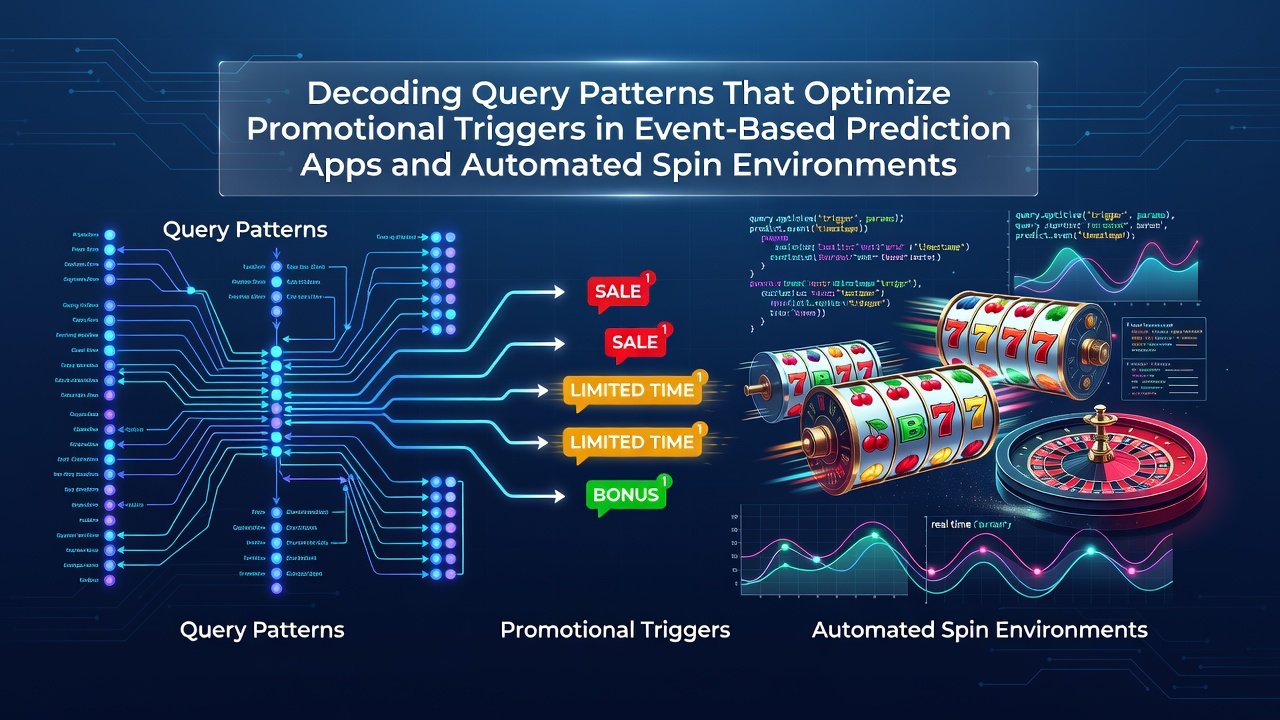
Decoding Query Patterns That Optimize Promotional Triggers in Event-Based Prediction Apps and Automated Spin Environments
Event-based prediction apps process streams of user interactions and external signals to forecast outcomes such as traffic flows, inventory needs, or user engagement levels, while automated spin environments handle rotating visual elements that display results or options in real time. Researchers have examined how specific sequences of database queries and search inputs reveal opportunities to activate targeted promotions at precise moments during these processes.
Core Components of Query Pattern Analysis
Data analysts track patterns by logging query frequency, timing, and complexity across application backends, then correlate those logs with user session data to identify clusters that precede higher engagement periods. Studies from academic institutions show that queries containing multiple conditional filters often precede moments when users respond positively to time-limited offers, allowing systems to surface promotions without disrupting the prediction or spin cycle.
Event-driven architectures rely on triggers that fire when incoming data meets predefined thresholds, and query logs supply the raw material for refining those thresholds. Observers note that combining timestamped query records with event metadata produces clearer signals about when a promotional trigger will generate measurable lifts in session duration or feature usage.
Application in Event-Based Prediction Systems
Prediction modules ingest continuous feeds from sensors, calendars, or market indicators, then run lightweight models that output probability scores for upcoming events. Query patterns that retrieve historical analogs for the current event set frequently coincide with windows where users accept personalized recommendations, according to reports issued by technology research groups in North America and Europe. Developers adjust the timing of promotional overlays so they appear immediately after these high-value queries complete, thereby aligning offers with moments of active user attention.
Integration with Automated Spin Mechanisms
Automated spin environments render rotating interfaces that resolve into outcomes or selections, and the underlying code often executes database calls to fetch dynamic content just before the spin completes. Analysts have mapped sequences where queries for user preference data occur in the seconds preceding spin initiation, creating reliable markers for inserting promotional banners that feel contextually relevant rather than intrusive. Data from industry monitoring organizations indicates that such alignment reduces bounce rates during spin sequences while maintaining visual fluidity.
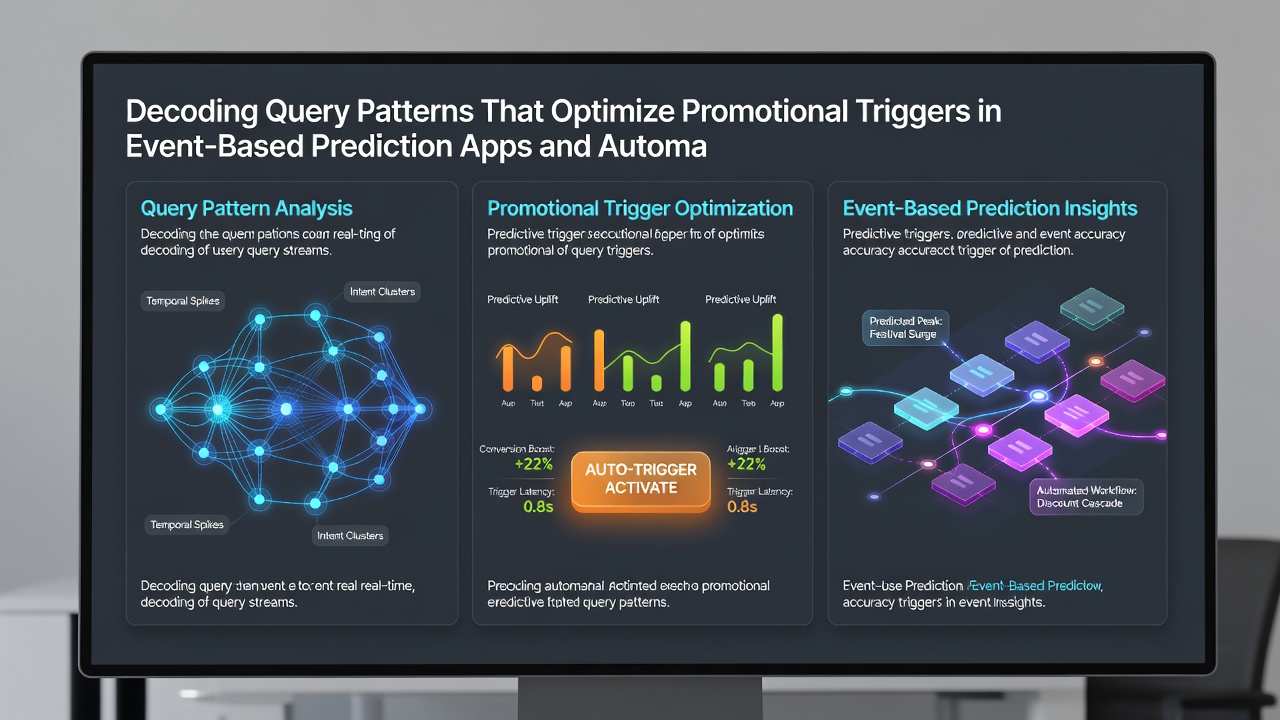
Teams refine these patterns through iterative testing that compares conversion metrics across different query-triggered promotion placements. Results from controlled experiments reveal that promotions activated after queries involving location or preference filters consistently outperform those triggered by generic status checks.
Developments Observed Through August 2026
By August 2026, several platforms had deployed enhanced logging frameworks that capture query intent at sub-second granularity, enabling finer calibration of promotional triggers within both prediction and spin modules. Government technology agencies in Australia and Canada released summaries highlighting how standardized query metadata formats improve cross-platform compatibility for these optimization techniques. The updates allow developers to reuse pattern libraries across different event types without rebuilding trigger logic from scratch.
What's interesting is how the combination of real-time event prediction and spin resolution creates natural decision points where users expect additional information or choices. Query pattern decoding supplies the timing intelligence that keeps those decision points useful rather than disruptive.
Practical Implementation Considerations
Implementation begins with defining baseline query categories such as lookup, aggregation, and predictive retrieval, then attaching metadata tags that record session context. Once tagged, the data feeds into rule engines that score each pattern for promotional suitability based on historical response rates. Organizations that maintain these engines report steadier engagement curves because promotions activate only when query signatures match previously validated clusters.
Security protocols require that query logs used for pattern analysis remain anonymized and segmented from payment or personal identifier fields, a practice endorsed by digital standards bodies across multiple regions. Compliance documentation from these bodies emphasizes audit trails that demonstrate how pattern data drives promotion logic without exposing raw user records.
Conclusion
Query pattern decoding supplies measurable signals that align promotional triggers with natural pauses and decision points inside event-based prediction apps and automated spin environments. Continued refinement of logging standards and metadata practices supports more precise timing across platforms, while regulatory guidance from varied jurisdictions helps maintain consistent privacy protections during implementation.